
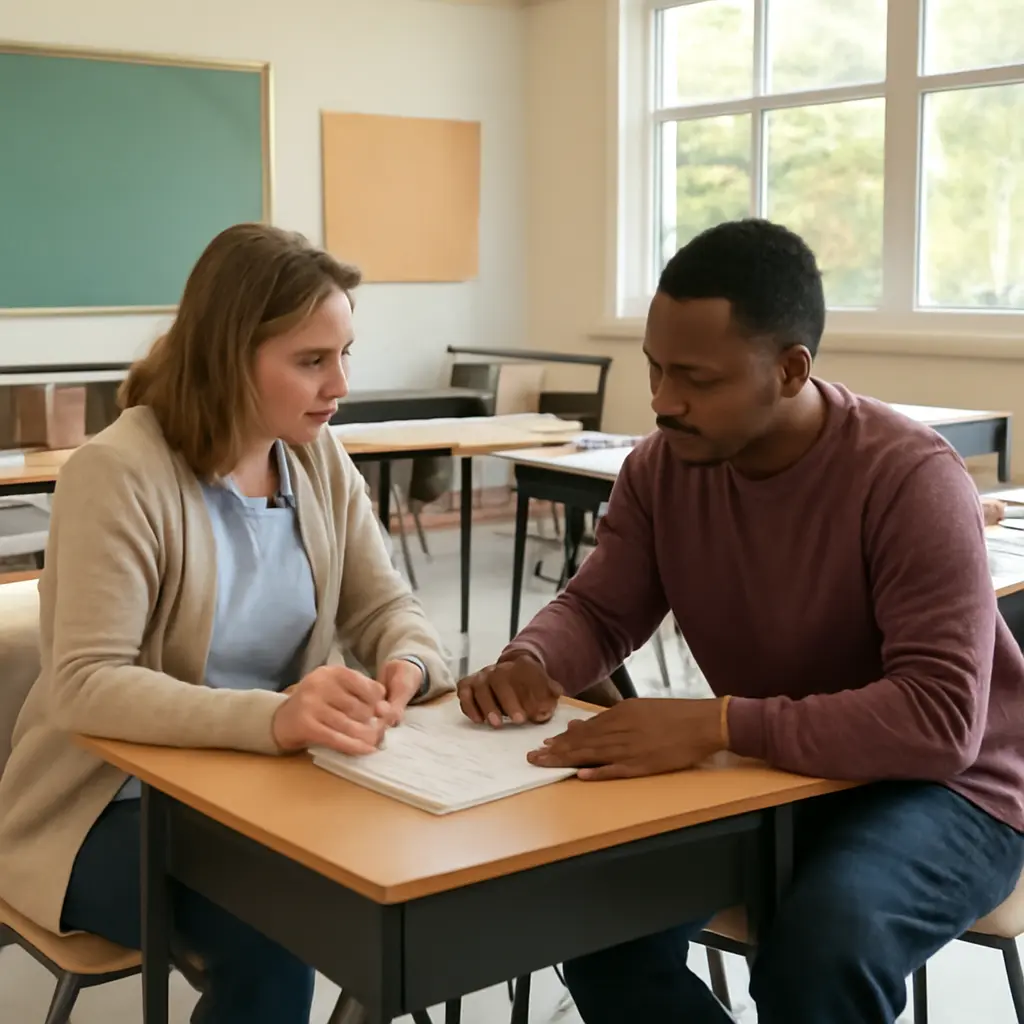
Here’s What Happens When Parents Partner With Teachers
When parents and teachers work together, students gain a more consistent network of support across home and school. This partnership—regular, two-way communication and shared effort around a child’s learning and well-being—can help families understand classroom expectations, help teachers recognize students’ strengths and needs, and support attendance and engagement. Research links family involvement with positive academic and social outcomes, although results depend on how schools invite families to participate and whether collaboration is accessible, respectful, and focused on students.
What parent–teacher partnership means for student learning
Parent–teacher partnership is an ongoing relationship in which educators and families exchange useful information, make shared plans, and support a student’s development. It is more than attending a school event: it can include communication about progress, coordinated help with learning routines, and joint problem-solving when a student faces an academic or social challenge.
The National Association for Family, School, and Community Engagement describes family engagement as a shared responsibility and a relational process in which families and educators work together to support children’s learning and development. That definition emphasizes trust, reciprocal communication, and meaningful participation rather than treating families as passive recipients of school updates.
The evidence supports taking this work seriously while avoiding a simplistic promise that any one activity guarantees higher grades. A review by the Harvard Family Research Project found that family engagement is associated with outcomes including achievement, behavior, and student well-being. The U.S. Department of Education’s National Household Education Surveys also track how families communicate with schools and participate in school activities, reflecting the variety of ways engagement occurs.
Two-way communication
Two-way communication means that teachers share timely information about learning and classroom life, while parents share insights about a child’s interests, circumstances, language, and needs. Communication can happen through conferences, phone calls, email, messaging platforms, translated notices, or brief conversations at pickup. The key is that families can respond and ask questions—not simply receive announcements.
Shared expectations and coordinated support
Shared expectations connect classroom goals with practical support at home. For example, a teacher might explain a reading strategy, while a parent helps the child practice it during a short, low-pressure routine. The National Center for Education Statistics has reported that many families participate in school communication and activities, but participation varies by family circumstances and school context. Effective partnerships therefore offer flexible options rather than assuming every caregiver can attend daytime events or provide the same resources.
How parent–teacher partnerships support students
Once families and teachers establish a reliable channel for sharing information, they can connect that relationship to specific student outcomes. The benefits are most plausible when communication is consistent, relevant to the child, and paired with practical actions.
Academic engagement and learning habits
Academic engagement includes a student’s participation, persistence, and connection to learning. Families can reinforce habits such as reading, organizing assignments, and asking for help, while teachers can identify strategies that match current classroom instruction. A 2019 meta-analysis by researchers William Jeynes and others found a positive relationship between parental involvement and student academic outcomes across the studies examined. As with other meta-analyses, the findings summarize patterns across research; they do not establish that every form of involvement produces the same effect for every student.
Attendance and early problem-solving
When a student’s attendance, assignment completion, or participation changes, a trusted parent–teacher relationship can make it easier to notice the change and discuss possible causes early. The school may learn about transportation, health, caregiving, or belonging concerns; the family may learn what support is available. The U.S. Department of Education identifies chronic absenteeism—typically missing at least 10 percent of school days—as an important indicator associated with lost instructional time. Partnership cannot remove every barrier, but it can help adults coordinate responses sooner.
Social and emotional well-being
Social and emotional support involves helping a student manage relationships, emotions, and challenges. Parents may notice changes at home that are not visible in class, while teachers observe peer interactions and classroom participation. Sharing observations can help adults respond consistently, refer a student to appropriate support, and avoid making assumptions from a single incident. Privacy and student dignity remain essential: sensitive information should be shared only with the people who need it to provide support.
Practical ways parents and teachers can partner
Partnership becomes useful when it is translated into manageable routines. Schools can make engagement more equitable by offering multiple ways to connect, while families can begin with a clear question or a specific observation about the student.
Set a regular, accessible communication routine
Agree on a preferred communication method, reasonable response times, and the best contact for different concerns. Schools should consider translation, disability access, work schedules, and limited internet or phone access. A brief, predictable update can be more useful than a high volume of messages that families cannot easily follow.
Use conferences for shared planning
A productive conference covers more than grades. Parents and teachers can identify what the student does well, name one or two challenges, agree on a realistic next step, and decide how they will check progress. Specific plans—such as reading together for ten minutes on several evenings or asking the teacher to share missing-work priorities—are easier to review than general requests to “do better.”
Recognize family knowledge and culture
Families know a child’s history, interests, language, and responsibilities outside school. Teachers bring knowledge of curriculum, classroom learning, and school services. Treating these forms of expertise as complementary can make decisions more relevant and help prevent misunderstandings. Schools should avoid equating visible participation—such as volunteering in person—with care or commitment; families contribute in different ways.
Barriers and how schools can address them
Even when both sides value collaboration, practical barriers can limit participation. Common obstacles include inflexible work hours, language differences, transportation, childcare, digital access, prior negative experiences with schools, and uncertainty about how to raise concerns. These factors can shape who is heard unless schools deliberately broaden their approaches.
Schools can respond by offering meetings at varied times, providing interpretation, using plain language, sharing more than one way to participate, and contacting families with positive as well as problem-focused updates. Teachers can also ask families what communication works for them instead of assuming. The U.S. Department of Education’s family-engagement guidance emphasizes building relationships and creating conditions for families to contribute to student learning.
For example, if a student’s homework is repeatedly incomplete, a partnership approach starts with inquiry rather than blame. The teacher can explain the assignment and ask what the family is observing; the parent can describe available time, access to materials, or competing responsibilities. Together, they might adjust the workload, arrange school-based help, or agree on a simple check-in. The example illustrates how shared information can lead to a more realistic response than an assumption about motivation.
Conclusion: partnership turns shared concern into coordinated support
Parent–teacher partnerships combine two-way communication, shared expectations, and coordinated support. Research associates family engagement with academic, behavioral, and well-being outcomes, while also showing why the quality and accessibility of engagement matter. Regular contact can help adults support learning habits, respond to attendance concerns, and notice social or emotional needs earlier.
Families and educators can begin with one practical step: agree on a communication method, identify a student strength and a current need, and set a small goal to review together. Schools can strengthen that effort by making participation welcoming and accessible to every family. For further reading, explore the National Association for Family, School, and Community Engagement’s family-engagement resources and the U.S. Department of Education’s guidance on family and community engagement.
Sources: National Association for Family, School, and Community Engagement, National Standards for Family-School Partnerships, https://nafsce.org/page/standards; Harvard Family Research Project, Family Involvement Makes a Difference: Evidence That Family Involvement Promotes School Success for Every Child of Every Age, https://archive.globalfrp.org/publications-resources/browse-our-publications/family-involvement-makes-a-difference-evidence-that-family-involvement-promotes-school-success-for-every-child-of-every-age; National Center for Education Statistics, Parent and Family Involvement in Education: 2019, https://nces.ed.gov/pubs2020/2020076rev.pdf; Jeynes, William H., A Meta-Analysis: The Relationship Between Parental Involvement and Student Academic Achievement, 2019, https://doi.org/10.1007/s10648-019-09483-5; U.S. Department of Education, Chronic Absenteeism, https://www.ed.gov/teaching-and-administration/supporting-students/chronic-absenteeism; U.S. Department of Education, Family and Community Engagement, https://www.ed.gov/teaching-and-administration/supporting-students/family-and-community-engagement