
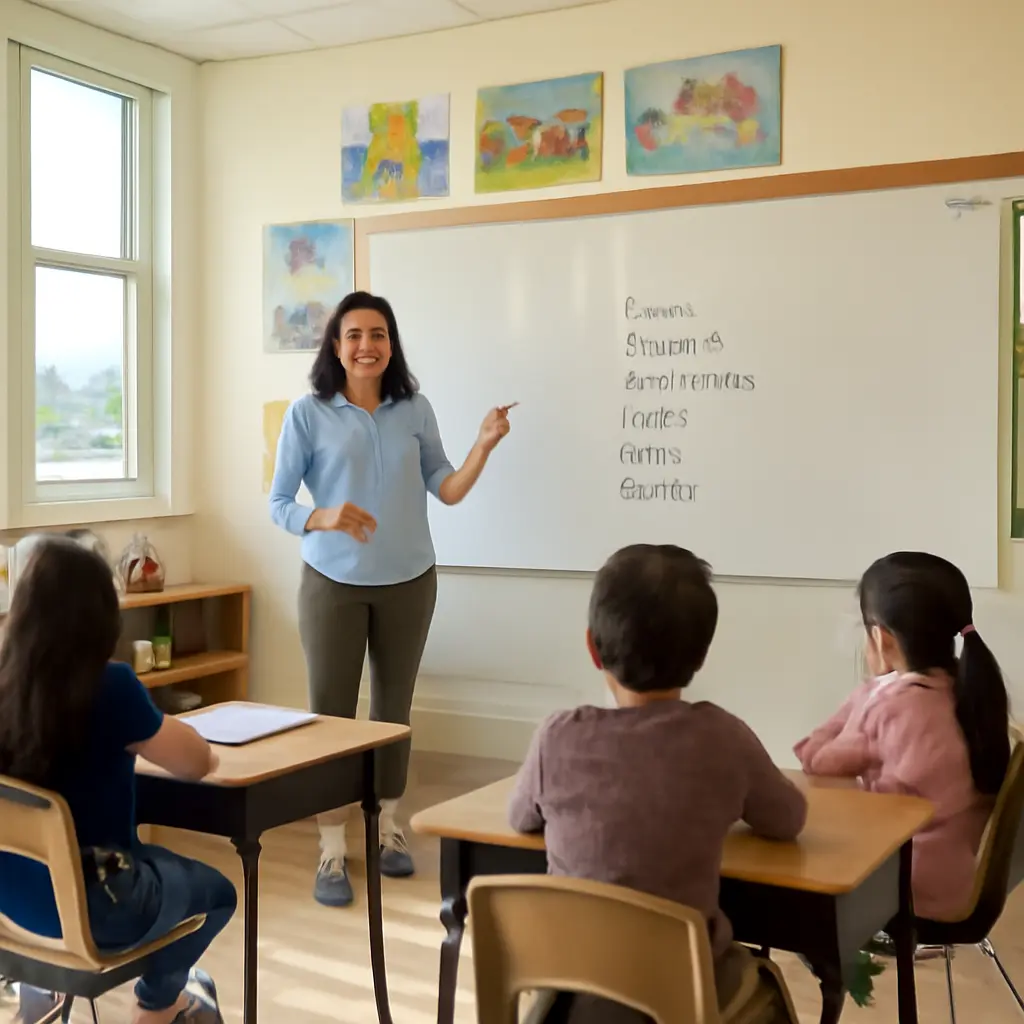
What happens when a school culture prioritizes expectations over punishment
A school culture that prioritizes expectations over punishment makes clear what students are expected to do, teaches the skills and routines needed to meet those expectations, and responds to misbehavior in ways that preserve safety and support learning. The approach does not mean ignoring harmful conduct or eliminating consequences. Instead, it shifts the emphasis toward prevention, consistent teaching, relationships, and proportionate responses. Research on school climate, restorative practices, and positive behavioral supports suggests these approaches can improve students’ sense of belonging and reduce exclusionary discipline, while national discipline data show why the issue matters: the U.S. Department of Education’s 2021–22 Civil Rights Data Collection reported that Black students were 15% of public-school enrollment but 28% of students receiving one or more out-of-school suspensions.
School Culture Expectations Over Punishment: Definition and Evidence
An expectations-first school culture is a shared approach in which adults explicitly teach, model, and reinforce behavioral expectations, then use fair and educational responses when students struggle to meet them. The National Center on Positive Behavioral Interventions and Supports describes school-wide positive behavioral interventions and supports (PBIS) as a framework for improving student outcomes by establishing predictable systems, teaching expectations, and using data to guide decisions. In this model, accountability remains important, but it is paired with instruction, support, and opportunities to repair harm.
The approach includes several related practices: clearly defined school-wide expectations, positive behavioral supports, restorative responses, and fair, proportionate consequences. These practices are not interchangeable, and no single program guarantees success. Their common principle is that discipline should help students understand expectations, maintain safety, and return to learning rather than rely on punishment as the default response.
The stakes are substantial. The U.S. Government Accountability Office has documented persistent racial disparities in school discipline, while the Centers for Disease Control and Prevention identifies school connectedness—the sense that students are cared for, supported, and included—as a protective factor associated with better health and academic outcomes. An expectations-first culture can address both concerns when its rules are clear, its responses are consistent, and adults examine whether discipline is being applied equitably.
Clear Expectations Make Behavior Teachable
Clear expectations describe observable actions rather than relying on vague labels such as “be good” or “show respect.” A school might define respect as listening without interruption, using appropriate language, and following reasonable directions. Staff then teach these behaviors in classrooms, hallways, cafeterias, and other settings, just as they teach academic routines.
The PBIS framework commonly organizes expectations around a small number of positively stated principles and translates them into setting-specific examples. Schools can validate whether expectations are working by reviewing attendance, classroom referrals, suspensions, and student and staff surveys. The essential measure is not simply whether a rule exists, but whether students understand it and adults apply it reliably.
Positive Behavioral Supports Reinforce Success
Positive behavioral supports are strategies that make expected behavior more likely through prevention, instruction, acknowledgment, and targeted assistance. Examples include greeting students at the door, offering predictable transitions, giving specific feedback, and providing additional coaching to students who need it. Reinforcement is not the same as bribery: effective acknowledgment communicates which behavior helped the student or community and encourages practice.
In a 2021 systematic review and meta-analysis published in Psychological Bulletin, researchers found that school-wide PBIS was associated with improvements in student behavior and school climate. Results depend on implementation quality, training, and sustained staff participation; adopting a program name without changing everyday practices is unlikely to produce the same benefits.
School Culture Expectations Over Punishment: Responses and Accountability
Once a school has taught its expectations, it needs responses that distinguish mistakes, repeated behavior, and serious harm. An expectations-centered approach does not require identical treatment in every situation. It requires transparent decision-making, attention to context, appropriate support, and protection for anyone affected. The response should be meaningful and proportionate while keeping the student’s access to education in view.
Restorative Practices Address Harm and Relationships
Restorative practices are ways of building relationships and responding to conflict by helping those involved identify what happened, who was affected, and what is needed to make things right. Depending on the situation, this may involve a facilitated conversation, a restorative conference, or a plan to repair damage and rebuild trust. Participation should be safe and appropriate; restorative work is not a requirement that a harmed student meet with the person responsible.
A 2023 study of Philadelphia’s citywide restorative-practices program, published in Proceedings of the National Academy of Sciences, found reductions in suspensions and improvements in several school-climate measures in participating schools. Such findings support restorative approaches as a promising option, but outcomes depend on staff training, time, implementation, and safeguards. Restorative practice should complement—not replace—responses necessary to address immediate danger or serious misconduct.
Proportionate Consequences Preserve Accountability
A consequence is a response linked to behavior and designed to uphold safety, responsibility, or learning. In an expectations-first culture, it may include reteaching a routine, completing a repair, losing a relevant privilege for a defined period, or receiving a formal disciplinary response when warranted. The school explains the reason, applies rules consistently, and provides a path back to participation.
Suspension or another exclusion from school may be necessary in some circumstances, particularly when safety is at risk, but frequent or uneven use can interrupt instruction and weaken students’ connection to school. The U.S. Department of Education’s 2021–22 discipline data show that exclusion is not distributed equally: students with disabilities and students from some racial and ethnic groups experience disproportionate rates of certain disciplinary actions. Schools should review discipline data by student group, offense, location, and decision-maker to identify patterns and correct unfairness without compromising safety.
Equity and Disability Supports Shape Fair Responses
Fair discipline accounts for students’ developmental needs, disability-related requirements, language access, and relevant circumstances while maintaining clear boundaries. For students with disabilities, school teams may need to consider individualized supports and applicable legal protections. For multilingual learners, adults should check whether a student understood the expectation before treating a communication gap as defiance.
The GAO’s 2018 report on K–12 discipline found that Black students, boys, and students with disabilities were disciplined at disproportionately high rates across multiple forms of discipline. Those national patterns do not establish the cause of any individual decision, but they make routine review essential. Schools can compare referral and consequence rates, examine subjective categories such as “disrespect,” and ask students and families whether rules are understandable and consistently applied.
School Culture Expectations Over Punishment: Implementation in Practice
A school’s culture is experienced in daily interactions, not just in its handbook. Expectations-first implementation therefore requires alignment among classroom teaching, leadership decisions, family communication, and student support. It also requires reviewing evidence over time so that promising intentions translate into safer, more inclusive learning conditions.
Staff Practice and Schoolwide Consistency
Staff consistency means that adults teach the same core expectations and use predictable, respectful responses, while still adapting supports to individual needs. A practical process is to define a few observable expectations, teach and rehearse them, establish a range of responses, and provide staff coaching. Leaders should make time for teams to review behavior data and discuss difficult cases, rather than leaving each teacher to improvise alone.
Consistency does not mean every student receives an identical consequence. It means similar situations are handled according to transparent principles, with relevant differences considered and documented. Schools can track classroom removals, referrals, suspensions, repeat incidents, attendance, and student perceptions to check whether the system is becoming more predictable and supportive.
Family and Student Partnership
Partnership means treating students and families as sources of information and collaborators in problem-solving. Schools can explain expectations in accessible language, invite feedback about how rules work in different settings, and communicate early when a pattern emerges. When students help shape routines and repair plans, they may better understand both the community’s standards and their own responsibility.
School connectedness provides a useful lens for this work. The CDC describes connectedness as students’ belief that adults and peers care about them and their learning. Schools can assess it through climate surveys and listening sessions, then use the findings alongside academic and discipline data. A respectful relationship does not erase accountability; it can make constructive accountability more credible.
Real-World Example: Philadelphia Restorative Practices
Philadelphia’s restorative-practices initiative illustrates how a district can move beyond a primarily exclusionary response model by training school staff and embedding relationship-building and restorative responses into school routines. The 2023 PNAS evaluation reported lower suspension rates and improvements in aspects of school climate in participating schools. The example demonstrates both the opportunity and the caution: district-wide change requires sustained resources, leadership support, and careful evaluation, and findings from one city should not be assumed to apply identically everywhere.
Conclusion: Expectations, Support, and Accountability
A school culture that prioritizes expectations over punishment teaches behavior before problems escalate, reinforces positive choices, responds to harm with proportionate accountability, and checks whether discipline is fair. Clear expectations, positive behavioral supports, restorative practices, and equitable review are connected parts of a coherent system—not alternatives to safety or responsibility.
The broader implication is that discipline shapes students’ access to instruction, their relationships with adults, and their sense of belonging. School leaders can begin by reviewing discipline patterns, teaching a small set of observable expectations, training staff in consistent responses, and inviting students and families to assess whether the approach is working. For further guidance, consult the U.S. Department of Education’s Civil Rights Data Collection, the National Center on PBIS, and the CDC’s resources on school connectedness.
Sources: U.S. Department of Education, 2021–22 Civil Rights Data Collection, https://civilrightsdata.ed.gov/; National Center on Positive Behavioral Interventions and Supports, What Is PBIS?, https://www.pbis.org/pbis/what-is-pbis; Gage, N. A., et al., “A systematic review and meta-analysis of school-wide positive behavioral interventions and supports,” Psychological Bulletin, 2021, https://doi.org/10.1037/bul0000318; U.S. Government Accountability Office, K–12 Education: Discipline Disparities for Black Students, Boys, and Students with Disabilities, 2018, https://www.gao.gov/products/gao-18-258; Centers for Disease Control and Prevention, School Connectedness, https://www.cdc.gov/youth-behavior/school-connectedness/; Augustine, C. H., et al., “Can restorative practices improve school climate and curb suspensions? Evidence from the Philadelphia Police School Diversion Program,” Proceedings of the National Academy of Sciences, 2023, https://doi.org/10.1073/pnas.2212646119.